You can see I like asking questions. Let me begin with one: how often do you change your job? I’ve done it once, and I don’t regret it.

In my early twenties, I left my first company after approximately two years. At the time, I thought I’d stay longer. In the interview, they were impressed when I said I was looking for “sparkled eyes” from my future colleagues—people who care about what they do. That line stuck with them. Maybe that’s why they hired me. It was a risky decision on their part, but for me, it was the best way to learn quickly—because I had no choice.

They put me in charge of leading and checking the work of sub-companies. I was the youngest person in the office until they hired another recent graduate. No one gave me instructions. If I didn’t know something, I had to find the answers myself. Sometimes I asked questions, but they were usually met with silence.

At first, I didn’t think much of it. But over time, that silence started to bother me. Why were people so hesitant to explain things? Why did no one seem curious? Eventually, I realized the answer—they didn’t care. Not about the work, the results, or even the questions. If they didn’t know something, they didn’t try to learn it. That hit me harder than I expected.

It made me wonder—why take a job you don’t care about? The answer is simple: money. But can you really feel proud of work done with indifference? When people only focus on deadlines instead of quality, mistakes pile up and when the final product falls apart, almost everyone acts surprised.

After a while, I couldn’t take it anymore. I couldn’t unsee the cracks—not just in the projects, but in the way the whole system operated. As a civil engineer, I didn’t have the authority to change how the company worked. But if I had a degree in Landscape Architecture, maybe I would’ve noticed the problems even earlier. Yes, they hired me without realizing that I had a background in Civil Engineering—not Landscape Architecture, which is a completely different field.

Eventually, I moved to a new job. New office, new team, same field—but this time my role focused only on technical drawings, with no interaction with sub-contractors. On my first day, they asked me to design a drainage system. I researched, used templates, and got it done. Then came tasks with lawns, roads, pedestrian paths, lights, and playgrounds. On paper, everything made sense.

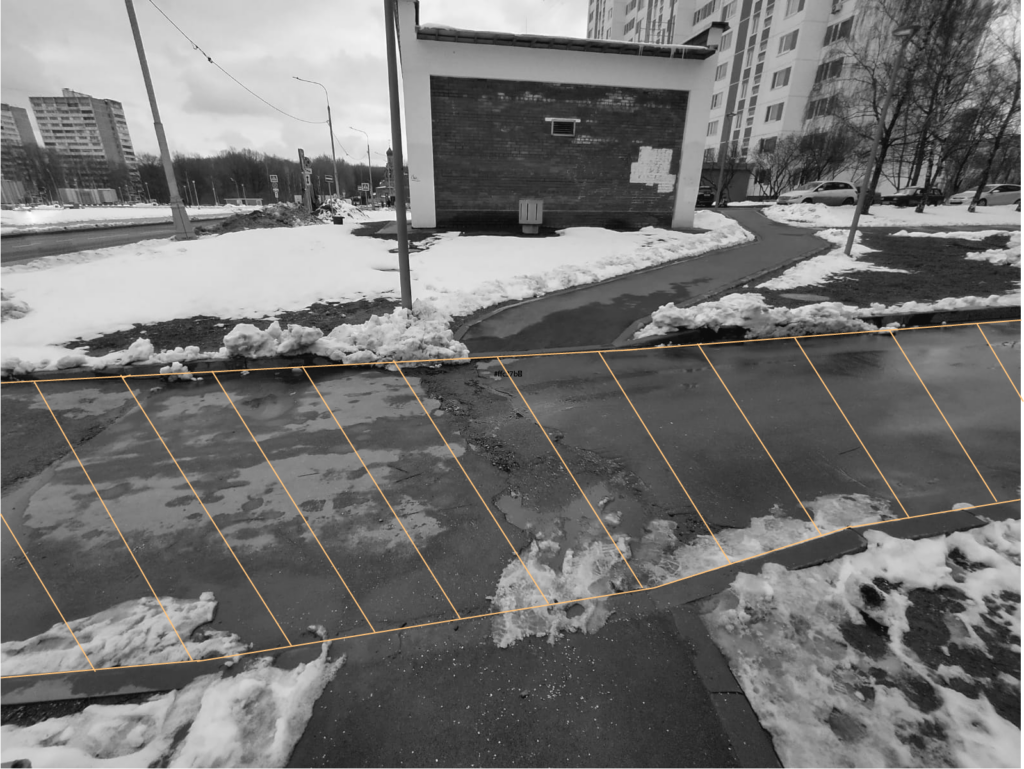
But when I visited the site, I was stunned. Some elements were completely wrong or hadn’t even been built. I refused to draw something that didn’t exist or had already failed. Maybe it’s because I have my own principles. Maybe it’s simply because I care.

And that’s the real question: how do you continue to work in a system where most people don’t care?

I still don’t have the answer. I’m applying to architecture school because I want to create spaces that feel emotional, and alive—something like therapeutic architecture, buildings that represent the emotional state of its creator or other people. But five days a week, I sit in an office surrounded by people who wait for instructions and never ask why. It makes me question my strength. It makes me question how much longer I can stay there.

Writing for me is not an academic exercise. It is not a formal essay. It is simply something I needed to express. A piece of my process. A record of what I have seen and how I have felt—because sometimes, to move on, you have to speak up. I’m still exploring how best to express myself. Most of the time, I make models. But this time, I decided to be a little more explicit—to describe what I feel in actual words. My goal is to let architecture alone express these ideas in real projects—that’s what I’m working toward.